

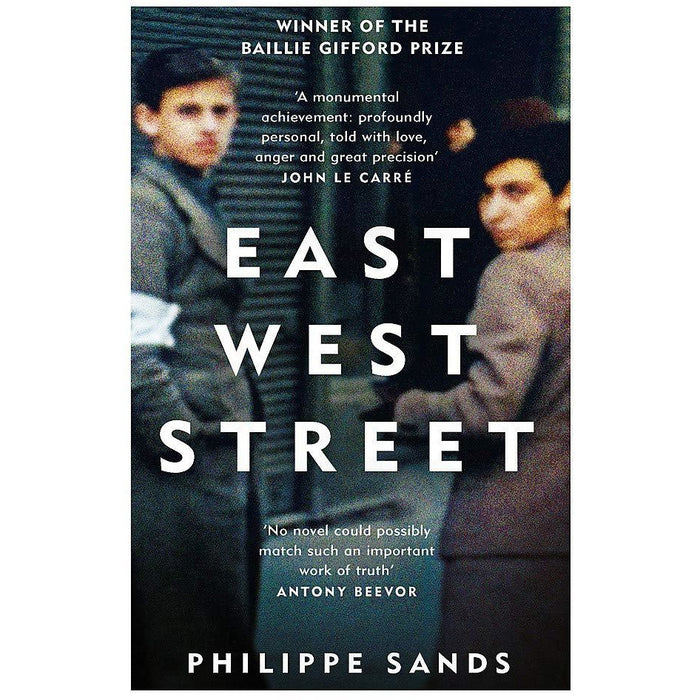

East West Street: On the Origins of Human Rights by Philippe Sands - Non Fiction - Paperback
Title:
East West Street
Condition: BRAND NEW
Format: Paperback
Overview:
East West Street is a masterful fusion of memoir and international legal history. When Philippe Sands receives an invitation to deliver a lecture in the Ukrainian city of Lviv, he embarks on a journey that unravels a family secret and widens into a global inquiry into the origins of postwar law. Delving into archives, interviews, and long-buried memories, Sands traces how the ideas behind genocide and crimes against humanity were forged in the crucible of conflict and reckoning. The narrative braids together the intimate threads of Sands’s own family history with the broader arc of history: the two Nuremberg prosecutors—Hersch Lauterpacht and Rafael Lemkin—whose groundbreaking work established the frameworks we still study today; the Nazi governor Hans Frank, responsible for brutal acts in and around Lviv; and the courageous individuals whose quiet acts of defiance helped shape justice. The result is an unforgettable blend of rigorous scholarship and human storytelling—a detective-like search that reveals how memory, guilt, and responsibility traverse generations. East West Street invites readers to question how nations remember and how the law seeks to hold power to account, all through a vivid, deeply intimate lens.
What Makes This Book Stand Out:
Few books manage to fuse a personal genealogical mystery with the birth of international law, and East West Street does so with remarkable clarity and elegance. Sands shifts deftly between archival documents, courtroom histories, and family recollections, showing how the concepts of genocide and crimes against humanity were crafted in the crucible of war and postwar accountability. He translates complex legal ideas into accessible, compelling prose without diluting scholarly rigor, making the origins of modern justice feel immediate and relevant. The book also operates as a data-rich travelogue, guiding readers from the quiet intensity of a Polish-Russian borderland to the nerve centers of Nuremberg and London, all while maintaining a suspenseful, human-centered narrative. It’s more than history; it’s a meditation on memory, obligation, and the moral responsibilities we inherit from the past. This is a work that will reward readers who crave thought-provoking, beautifully written nonfiction that reads like a page-turning inquiry into the roots of world law.
Who This Book Is Perfect For:
This is for readers who crave a rigorous yet accessible exploration of history, law, and memory. It will resonate with students and professionals in international law, history buffs seeking the origins of key legal concepts, and memoir readers who enjoy intimate storytelling illuminated by deep research. It’s ideal for book clubs and classrooms—an excellent gateway into topics such as genocide, crimes against humanity, and transitional justice. Fans of global travelogues, archival sleuthing, and ethically charged biographies will find East West Street a compelling, thought-provoking cornerstone for reading lists about war, justice, and the long shadows they cast across generations.
Key Highlights:
- A groundbreaking blend of memoir and legal history that anchors the concepts of genocide and crimes against humanity in human stories.
- A meticulous weaving of Sands’s family history with the origins of international law at the Nuremberg trials.
- Clear, accessible explanations of complex legal ideas without sacrificing accuracy.
- Vivid journeys across cities like Lviv, London, and beyond, anchored in archival discoveries.
- A moving meditation on memory, guilt, and intergenerational responsibility.
- Readable for non-specialists yet substantial enough to satisfy students of history and law.
- A timely invitation to reflect on accountability in our own moment and future.
About the Author:
Philippe Sands is a distinguished international lawyer and professor of international law at University College London. His work sits at the intersection of law, memory, and human rights, and he is known for translating intricate legal debates into engaging, human-centered narratives. East West Street grew from his long-standing research into the birth of modern international justice and the people who helped shape it. Sands’s writing blends rigorous archival scholarship with intimate, reflective storytelling, offering readers a rare combination of intellectual clarity and emotional resonance. Through his lens, readers gain not just a chronology of events but a deeply felt inquiry into how laws evolve to confront atrocity—and how personal history can illuminate public history alike.
Why You’ll Love This Book:
Choosing East West Street means choosing a work that rewards both reflection and curiosity. You’ll gain a nuanced understanding of how the frameworks behind genocide and crimes against humanity emerged, while following a family’s history that makes these grand ideas feel intimate and urgent. The book is a powerful gift for readers of non-fiction, history, and memoir, and for students and educators seeking a compelling case study in the birth of international justice. With its elegant prose, rigorous research, and human-scaled perspective, this is a title that earns its place on any serious reading list and in any thoughtful bookshelf.
Please Note: The individual books included in this listing will be dispatched as per the original UK ISBN and UK edition cover image shown in the image.


